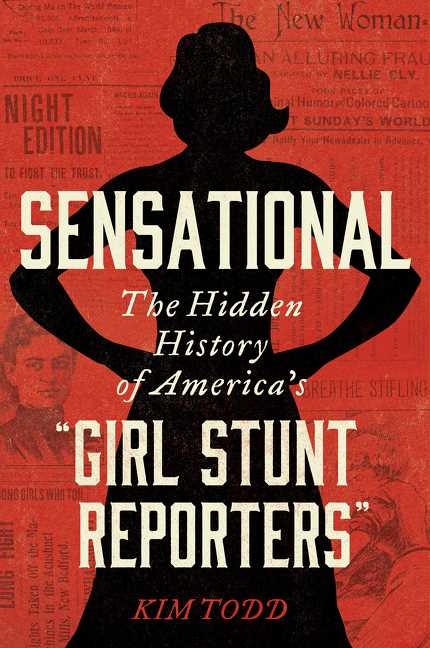
Sensational
All through the late 1880s and 1890s, women across America disguised themselves in shabby clothes and sewed coats in factories, fainted in the streets to test public hospital treatment, snuck behind the scenes at adoption agencies, going undercover to probe societal ills. By crafting longform narratives that stretched over weeks and read like novels, these “girl stunt reporters” changed laws, launched labor movements, and redefined what it meant to be a journalist; by 1900, more articles had bylines by women than men. Newspaper editors sought a new kind of story to fill their numerous pages, one that would reflect the changing country back to itself, stoking its anxieties but also feeding its hopes. Stories like those penned by women in disguise. UNDERCOVER argues that, rather than being an oddity of history, stunt reporters changed the trajectory of both journalism and memoir. They put a new female character in the headlines—not the all-too-common victim of assault or murder—but a protagonist. More and more were moving to the big cities, finding jobs, living on their own, but still no laws protected them from sexual harassment or marital rape. They couldn't vote, but the girl stunt reporters could interview presidential candidates. Their nerves might thin, but they could leap into freezing waves and face down factory superintendents. But after a decade, they faced a vicious backlash as stunt reporting became synonymous with “yellow journalism.” The way they wrote about the body was deemed obscene. Turn-of-the-century advice books for aspiring women journalists warned them to steer clear of stunts. The whole genre was deemed a particularly female variety of trash. But the lingering power of these women’s voices made Nathaniel Hawthorne’s fear that “the ink-stained Amazons will expel their rivals by actual pressure, and petticoats wave triumphantly over the field” came true. These women pioneered strategies that defined Progressive Era “muckraking,” the intimate tone and vivid scenes of the “New Journalism” of the 1960s and 70s, and the techniques of the “immersion journalism” and “creative nonfiction” of today. They changed how people would tell stories forever.
- Publisher: Harper Perennial
- Publication date: 21/03/2023
- ISBN: 9780062843623
- Page extent: 400
- Format: Paperback
- Dimensions: 203 mm x 135 mm